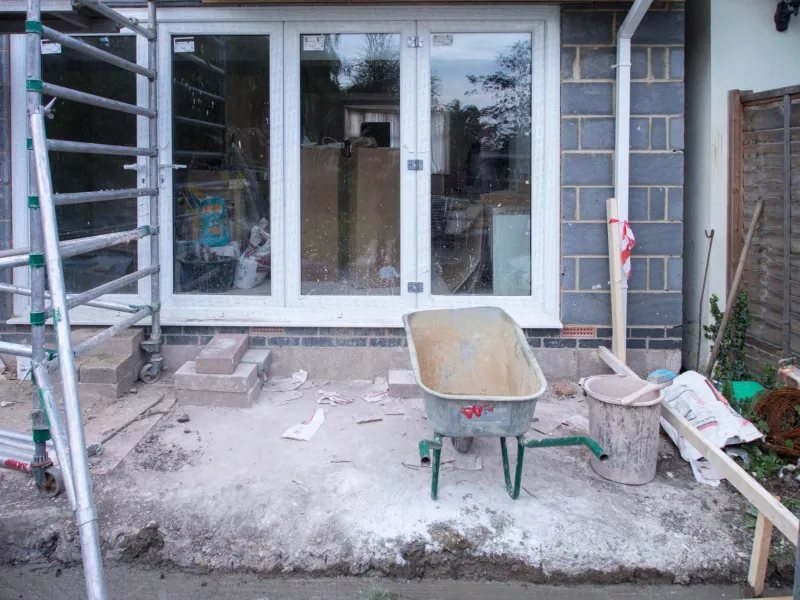
The Programme Hangs on the Order Book: Procurement Planning for UK Renovations

Photo: Thomas Nugent , CC BY-SA 2.0, via Wikimedia Commons
Demolition feels like the start of a renovation. In programme terms, however, the decisive work has often already happened in the order book. Windows, kitchens, structural steel, bricks, tiles and specialist finishes can carry lead times that run from several weeks to several months. If those items are ordered only when the site is ready for them, the programme is already behind. Procurement planning is therefore not an administrative extra. It is part of the build sequence.
What Long-Lead Really Means
A long-lead item is not simply one that takes time to deliver. It usually involves design approval, a site survey, fabrication or bespoke manufacture, sample sign-off, batch matching or a specialist installer. Windows and external doors may require a survey once openings are formed, and in conservation areas or listed buildings they may also require planning or listed building consent. Structural steel requires calculations, fabrication drawings and a fabricator's slot. A kitchen requires a design freeze, an appliance schedule and a worktop template that can only be taken after the units are installed.
Bricks can be difficult to match, particularly on older properties where the original stock is no longer made. Tiles may be produced in batches, and specialist finishes may need samples, curing time or a named installer. The lead time quoted by a supplier is only one part of the picture. The time needed for decisions, approvals and surveys is often longer.
Build the Schedule Backwards from the Build Sequence
A procurement schedule should be built backwards from the required installation dates, not forwards from the day the order is placed. Start with the practical completion date and work back through installation, delivery, order, approval, sample sign-off and design freeze. Add realistic float for supplier delays, site measurements and client decisions. The result is a set of decision deadlines that the household and the builder can both see.
The schedule should follow the actual build sequence. External windows and doors usually need to be installed before the building is weathertight. Structural steel may need to be in place before roof work, first fix or internal walls can proceed. Kitchens need to be ordered before first fix is complete so that services, appliance positions and ventilation can be coordinated. Tiles and finishes need to be selected before plastering and decorating reach the point of no return. A procurement schedule that ignores these dependencies is only a shopping list.
The Items That Quietly Decide the Date
Windows and external doors are a common pinch point. The survey, manufacture and delivery sequence can be long, and a missed measurement can lead to a second order. Structural steel is another. Fabrication slots are not infinite, and a delayed steel delivery can stop roof work, staircase installation or internal alterations. Kitchens carry multiple dependencies: cabinetry, appliances, sinks, taps, worktops and splashbacks may come from different suppliers with different lead times. Worktops cannot be templated until the units are fitted, so the kitchen is rarely complete on the day the cabinets arrive.
Bricks, roofing materials and external finishes can also delay the weathertight stage. Tiles, timber flooring and specialist plasterwork may need batch approval or acclimatisation on site. In each case, the risk is not only the delivery date. It is the chain of approvals and measurements that precedes it.
Deposits, Storage and the Cost of Ordering Late
Deposits secure manufacturing slots, but they also carry obligations. Before paying, confirm the cancellation terms, the payment schedule, what happens if the site is not ready and whether the deposit is protected if the supplier fails. Ask for lead times in writing and keep a record of the date the order was placed. A verbal assurance that the windows will be ready in eight weeks is not a programme.
Storage needs as much thought as ordering. Bricks should be kept off the ground and protected from frost and rain. Windows should be stored upright and secure. Kitchen units should be kept dry and flat. Tiles should be kept in their batches and away from damp. If the site cannot store items safely, a supplier holding arrangement or a later delivery slot may be better than early delivery. Ordering early does not mean cluttering the site early.
Late ordering has visible costs: trades standing idle, scaffold hire extending, temporary accommodation running on and the household living in a half-finished house for longer. It also has less visible costs, such as reordering at a higher price or accepting an unsuitable alternative because the preferred item is no longer available. Early ordering has risks too, chiefly damage, design changes and storage problems, but these can be managed through approval gates and staged deliveries.
Spotting Delay Risks Before the First Skip Arrives
A procurement register is a simple tool that prevents surprises. For each critical item, record who is responsible for ordering, the current status, the order date, the confirmed lead time, the delivery date and the installation date. Use a red, amber and green rating and review it at the pre-start meeting and then weekly. The register should include client-supplied items as well as builder-supplied items, because the programme does not care who placed the order.
Check the approvals that sit alongside procurement. Planning conditions, building control queries, party wall awards, structural calculations and sample approvals can all hold up an order. Ask suppliers for written lead times and delivery windows, and identify approved alternatives before a delay becomes urgent. The household should also have a decision deadline schedule for tiles, handles, paint colours, sanitaryware and appliances. Leaving these choices open is a procurement risk in its own right.
Working Together on the Order Book
Clarity about who buys what is essential. Client-supplied items need agreed delivery arrangements, insurance, storage and responsibility for damage. Builder-supplied items need the same clarity in reverse. A single shared procurement schedule, reviewed alongside the construction programme, allows both parties to see where decisions are outstanding and where a late order is beginning to threaten the sequence.
In 2026, lead times can still move quickly, and a supplier's quoted date is not a guarantee until the order is confirmed. The practical rule is straightforward: order the critical items before demolition begins, not everything, but the items that would stop the build if they arrived late. A procurement plan does not remove all risk, but it moves the conversation from reaction to foresight. RMR Builders Ltd treats that foresight as part of reliable construction, because a programme that lasts is built on decisions made well before the first skip arrives.