When the Sky Writes the Programme: Planning UK Renovations Around Wet Weather
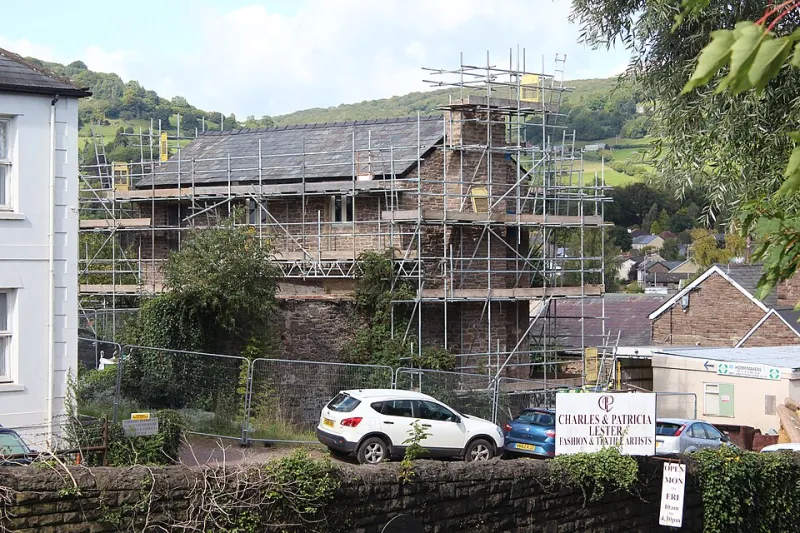
Photo: M J Roscoe , CC BY-SA 2.0, via Wikimedia Commons
A UK renovation programme that assumes uninterrupted dry weather is not a programme. It is a hope. Rain, wind, frost and short winter days are normal conditions for building work in this country, and a calm project is one that plans for them rather than reacting to each forecast as a surprise.
The practical question is not whether weather will affect the work. It is where, when and how much. A builder who answers that question early gives the client something more useful than a guaranteed completion date: a sequence of work that can absorb disruption without losing the plot.
Sequence before weather
The first defence is sensible sequencing. External work such as groundworks, drainage, brickwork, roofing and external rendering is naturally more exposed. Where possible, these activities should be programmed for the more reliable months, with internal first fix, joinery, plastering and second fix arranged to continue under cover.
This is not always possible. A project may begin in autumn, or a roof may need urgent repair in January. In those cases, the programme should identify the weather-sensitive elements and place protection around them. A temporary roof, scaffold sheeting, sealed openings and a clear water-management plan are not luxuries. They are the difference between a delay of days and damage that takes weeks to put right.
Drying is work, not waiting
Many weather-related delays are not caused by rain falling on people. They are caused by moisture inside the building. Plaster, screed, render and paint all need appropriate conditions. Cold temperatures can slow curing; damp air can extend drying times; and forced drying can create problems of its own if it is applied too quickly or without ventilation.
A realistic programme allows for these periods. It also allows for the fact that a wet autumn can leave a building fabric damper than expected. The builder should explain what is being dried, how it is being checked and what decisions depend on it. This is not a technicality. It is the point at which a programme either holds together or begins to compress in ways that affect finish quality.
Temporary protection and the daily routine
Good weather planning is visible on site. Covers are stored ready, not improvised. Openings are protected at the end of the day. Gutters and drains are kept clear. Materials that are sensitive to moisture are raised and covered. Cables and temporary supplies are checked. A short daily routine prevents a great deal of avoidable loss.
On exposed sites, wind can be as disruptive as rain. Scaffold sheeting must be fixed correctly, and temporary roofs must be designed for the load they will carry. These are not matters for guesswork. They belong in the site plan, the risk assessment and the conversation with the client.
Buffers, not false promises
A programme should contain a weather allowance. This is not padding for its own sake. It is recognition that some weeks will be lost. The allowance should be visible and explained, so that the client understands what it covers and what it does not.
Equally, a builder should not promise a fixed date that ignores the season. False certainty is worse than an honest range. In 2026, with material lead times and trade availability still requiring careful management, a programme that is realistic about weather is also a programme that is more likely to protect quality.
When rain does interrupt work, the response should be orderly. The site is made safe. Exposed work is protected. The affected trades are rescheduled. The client is told what has changed and what it means for the next decision. A weekly look-ahead meeting, even a short one, is often enough to keep everyone aligned.
Communication that keeps its footing
Weather can make clients anxious because it feels outside their control. Clear communication restores some of that control. Tell them which activities are weather-sensitive, which are not, and what the fallback plan is. Explain when a decision is needed so that a dry day is not lost waiting for a tile choice or a paint colour.
The aim is not to pretend that weather does not matter. It is to show that it has been considered. A renovation is a sequence of dependent decisions, and weather is one dependency among many. Handled with candour, it becomes a normal part of the build rather than a running crisis.
RMR Builders Ltd approaches the programme in that spirit: plan for the season, protect the work, allow honest buffers and keep the client informed. The British sky will do what it does. The programme should be written to cope.